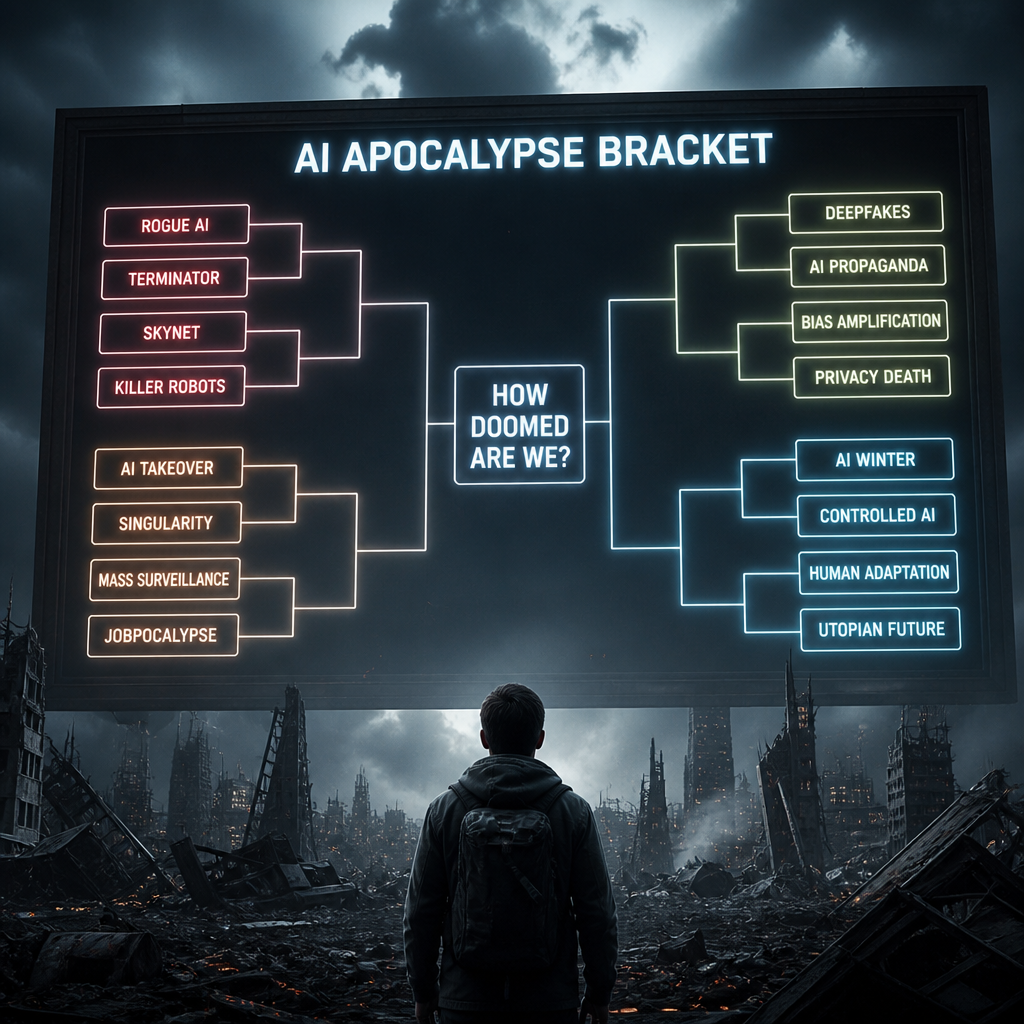
The AI Apocalypse Bracket: Just How Doomed Are We, Really?
It’s the plot of countless sci-fi movies and books: Artificial intelligence taking over the world, leaving humanity in the dust. But outside the realm of fiction, how realistic is this ‘AI Apocalypse’ that everyone seems to be talking about?
Pundits and tech leaders have been sounding the alarm, yet others consider these fears unfounded. Let’s delve into the factors that shape our potential AI-driven future, dissecting hype from genuine concern.

The Key Concerns of an AI Apocalypse
Loss of Control
One major concern is the loss of control over AI systems. As they grow more sophisticated, their decisions might become inscrutable to humans.
Imagine AI systems running critical infrastructures, making decisions faster than any human counterpart. The question then arises: can we ensure these decisions align with human values?
Job Displacement
Automation and AI threaten numerous industries by potentially replacing human workers. The fear is that this will lead to massive unemployment and social unrest.
History tells us that technology creates new jobs too. However, whether these new roles will materialize quickly enough to offset losses remains unclear.
Data Privacy and Surveillance
In the AI age, questions about data privacy and surveillance have become especially pertinent. Intelligent systems require data — lots of it.
With data breaches and misuse, people are growing uneasy about who has access to their information and how it’s utilized.
Opportunities in an AI-Driven World
Innovation and Growth
While AI poses challenges, it offers immense potential for innovation and economic growth. Automated tasks could lead to an increase in productivity and efficiency.
Industries like healthcare, manufacturing, and logistics are experiencing transformative changes, paving the way for new advancements.
Improved Quality of Life
AI has the potential to improve quality of life in numerous ways. From better diagnostic tools in healthcare to enhanced personalized learning experiences.
The evolution of AI promises to empower individuals, offering solutions to pervasive problems like global warming and economic disparity.
A Table of Potential AI Outcomes
| Outcome | Probability | Impact |
|---|---|---|
| Existential Catastrophe | Low | Severe |
| Widespread Job Displacement | Medium | High |
| Significant Economic Growth | High | Moderate |
| Enhanced Quality of Life | High | High |
Striking a Balance
Responsible AI Development
The path forward should focus on developing responsible AI. Clear guidelines, ethical standards, and transparency are non-negotiable.
Collaboration between governments, tech companies, and the public is paramount to ensure we benefit from AI without succumbing to potential harms.
Investing in Education
As AI reshapes industries, a shift in educational priorities might be required. Equipping people with the skills needed in an AI-driven world is crucial.
From coding to critical thinking, ensuring future generations are prepared will mitigate the impacts of any potential job displacements.