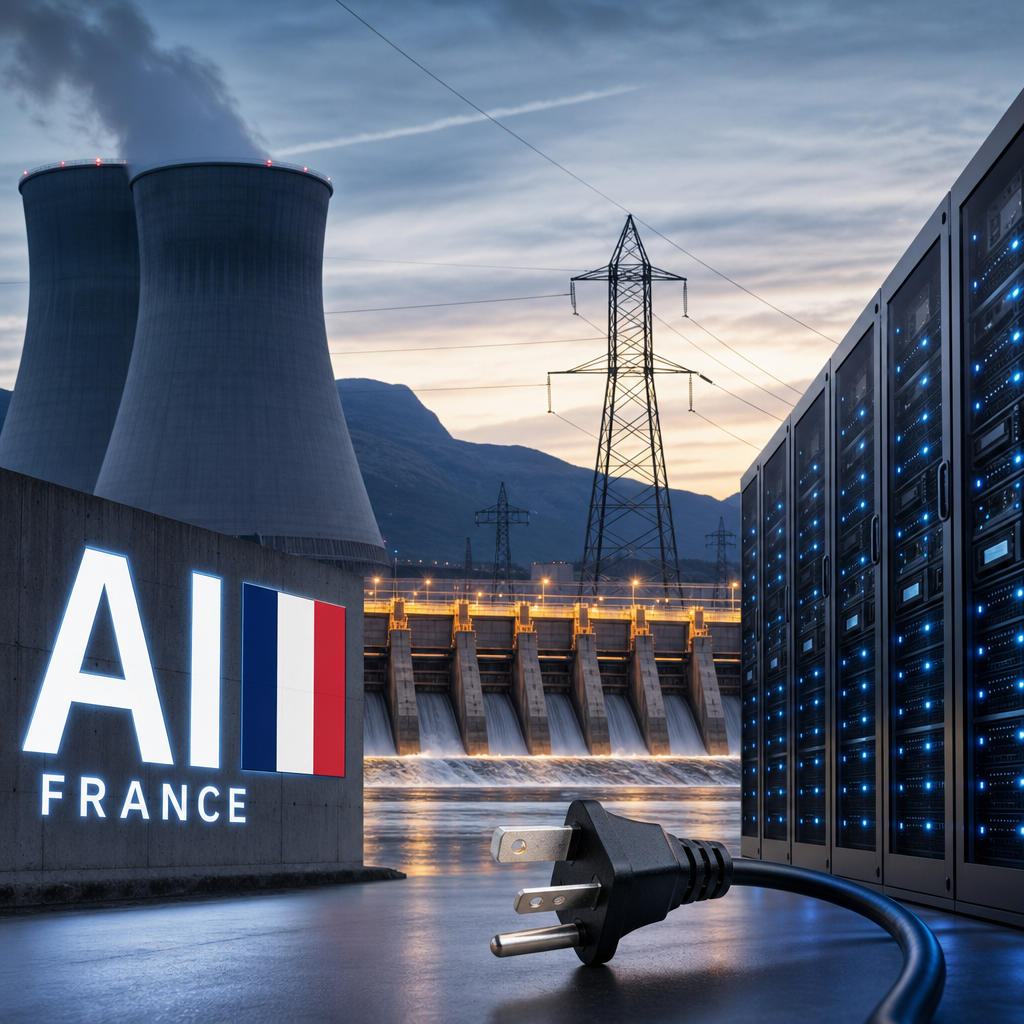
The Unforeseen Advantage: How France’s Cheap Energy Energizes Its AI Ambitions
In the race for artificial intelligence supremacy, France is betting on an unexpected ally: its abundant and cheap energy. While tech giants around the world strive to outpace each other, this European nation is leveraging its energy advantages to turbocharge its AI initiatives. Yet, the shadow of American Big Tech looms large, threatening to plug in first and claim the lead.
France’s strategy centers on leveraging its extensive nuclear power base, offering a stable and inexpensive energy supply. This positions the nation uniquely at a time when energy consumption is a critical factor in developing and deploying cutting-edge artificial intelligence technologies.

France’s Robust Energy Framework
France is often hailed as a champion in nuclear energy. With over 70% of its electricity generated from nuclear power, the country enjoys lower energy costs compared to many of its counterparts. This not only keeps residential bills in check but also provides businesses, especially energy-hungry sectors like AI, a competitive edge.
The availability of cheap energy becomes crucial as artificial intelligence and machine learning techniques become more data-intensive and power-hungry. France’s infrastructure ensures that AI firms can run their computations cost-effectively, a pivotal incentive for startups and large enterprises alike.
The AI Industry’s Growing Energy Demand
- Storage and Processing: Training AI models, particularly in deep learning, requires immense computational power and storage capabilities.
- Data Centers: Large-scale data centers consume enormous amounts of electricity, emphasizing the need for cost-effective energy solutions.
- Sustainability: Lower energy costs can also translate into more sustainable business practices, aligning with global goals for reduced carbon footprints.
The Appeal of France to AI Enterprises
The synergy between France’s energy policies and its AI ambition creates a fertile ground for growth. With government initiatives supporting AI research and a steady energy supply, France positions itself as a compelling destination for AI investment, research, and development.
Moreover, this commitment to AI is evident in the nation’s dedication to nurturing talent through world-class educational institutions and fostering partnerships between academia and industry.
Pioneering AI Projects and Partnerships
France’s AI landscape is teeming with innovation. From collaborative ventures between tech firms and academic institutions to government-backed research labs, the nation is investing heavily in its AI future.
Projects like the AI for Humanity initiative showcase France’s vision to not only lead in AI development but also align these advancements with ethical standards and societal benefits.
| Factor | Impact |
|---|---|
| Extensive Nuclear Energy | Provides consistent, low-cost energy source for AI processes. |
| Government Support | Incentivizes AI research and investment through policies and funding. |
| Academic Excellence | Cultivates a pool of skilled professionals for the AI sector. |
The Looming Shadow of American Big Tech
Despite France’s promising prospects, the influence of American Big Tech cannot be overlooked. Companies like Google, Amazon, and Microsoft are rapidly expanding their AI capabilities, often leveraging their existing global infrastructure and substantial R&D budgets.
The possibility of these tech behemoths tapping into France’s energy resources could pose a challenge, potentially outpacing local competition and reaping the benefits of France’s energy affordability.
Conclusion: A Future Powered by Innovation
As the AI race intensifies, France’s gamble on its energy resources might prove pivotal. In a digital economy driven by data and computation, the nation’s strategic advantages could establish it as a formidable player in the AI domain.
However, with the relentless pace of American Big Tech, France must continue to innovate and adapt to maintain its edge, ensuring that the full potential of its energy advantage materializes in lasting competitive gains.