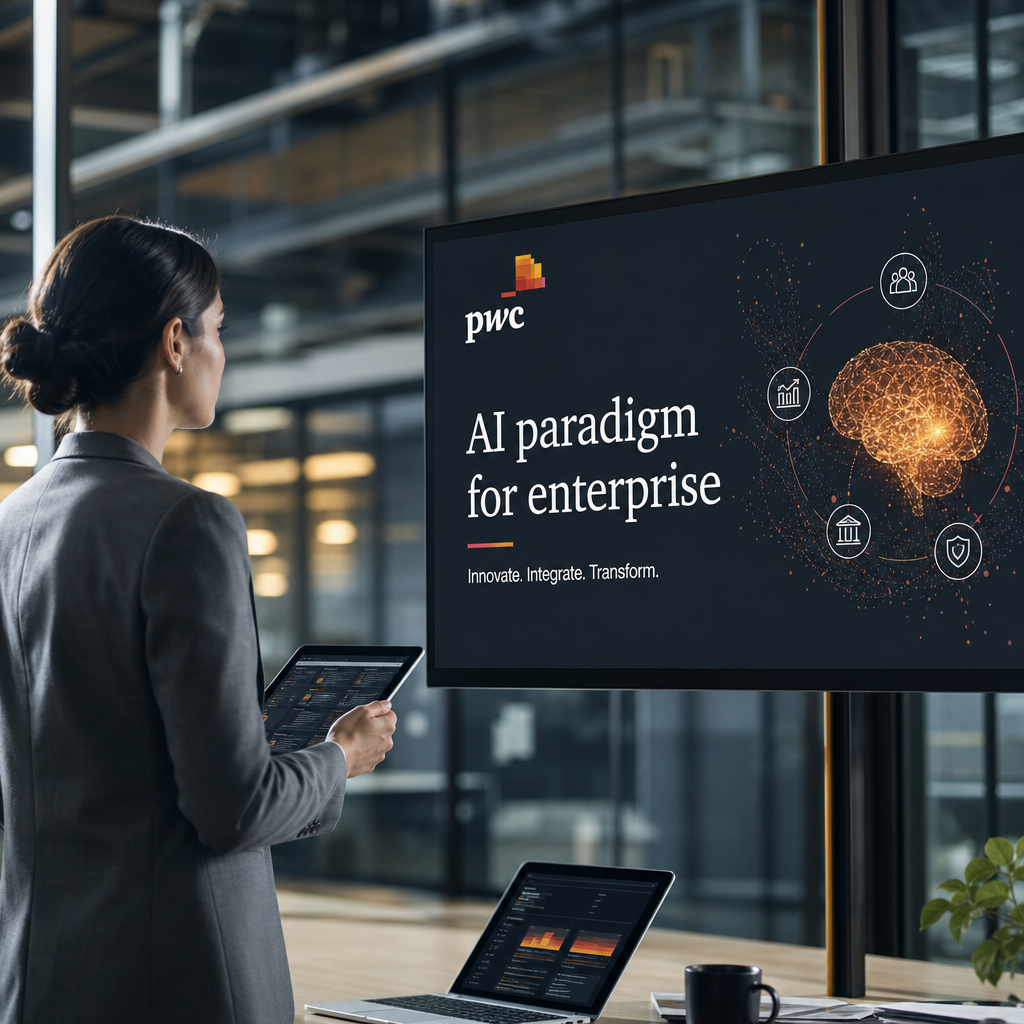
Imagine a world where businesses predict customer desires before they even express them. As fantastical as it may sound, this is the promise of Artificial Intelligence in the business landscape. AI isn’t just another tool; it’s a paradigm shift that is fundamentally altering how enterprises operate and compete.
The implementation of AI solutions in business is more than a trend—it’s becoming an imperative. Companies adopting AI technologies are not only enhancing efficiency and customer experience; they are also redefining the boundaries of innovation and value creation.
The Impact of AI on Business Operations
AI is revolutionizing business operations across various domains, from customer service to logistics. By facilitating automation and improving precision, AI helps businesses streamline processes that were once labor-intensive and prone to mistakes.
AI in Customer Service
AI-driven chatbots and virtual assistants are transforming customer service by enabling businesses to provide 24/7 support. These tools can handle routine inquiries, allowing human agents to focus on complex issues.
- Immediate response to basic customer inquiries
- Consistent and personalized customer interaction
Optimizing Supply Chain Management
Through predictive analytics, AI is enhancing supply chain management, forecasting demand with unprecedented accuracy. This capability allows businesses to optimize inventory levels and reduce costs.
- Improved demand forecasting
- Cost-efficient inventory management
AI Applications in Enterprise Growth
AI’s role in driving enterprise growth is increasingly profound. By leveraging AI technologies, companies can unlock new opportunities and tap into unexplored markets.
Market Insights and Consumer Trends
AI tools can analyze vast amounts of data to unearth insights about market trends and consumer preferences. This knowledge is crucial for businesses looking to stay ahead of competitors.
- Data-driven decision making
- Enhanced market analysis
Innovation and Product Development
AI fosters innovation by facilitating rapid prototyping and testing of new product ideas. This accelerates the time-to-market, giving enterprises a competitive edge.
- Efficient product design and testing
- Decisive competitive benchmarking
Challenges in Implementing AI
Despite its potential, AI adoption is not without challenges. Businesses must navigate issues ranging from integration complexities to ethical considerations.
Integration and Scalability
Integrating AI across existing systems can be daunting. Ensuring that AI tools scale effectively as the business grows is essential but often challenging.
- Compatibility with legacy systems
- Ensuring scalability and sustainability
Ethical and Privacy Concerns
As AI systems handle more personal data, enterprises must address the resulting ethical concerns. Maintaining consumer trust is paramount in a data-driven world.
- Data privacy regulations
- Trustworthy and ethical AI solutions
Case Studies: Success Stories of AI in Business
Several organizations have successfully harnessed AI to transform their operations and drive growth. These case studies provide insights into the varied applications and benefits of AI in a business context.
| Company | AI Application | Outcome |
|---|---|---|
| Netflix | Recommendation Algorithms | Increased user engagement |
| Amazon | Supply Chain Optimization | Reduced delivery times |
| Starbucks | Predictive Analytics | Personalized marketing campaigns |
The Future of AI in Business & Enterprise
The trajectory of AI in business suggests an exciting future with endless possibilities. As technologies evolve, companies that adapt will lead their industries into this new era.
AI’s potential is vast, and the evolution of these technologies will continue to disrupt traditional business models, creating new paradigms of growth and efficiency.