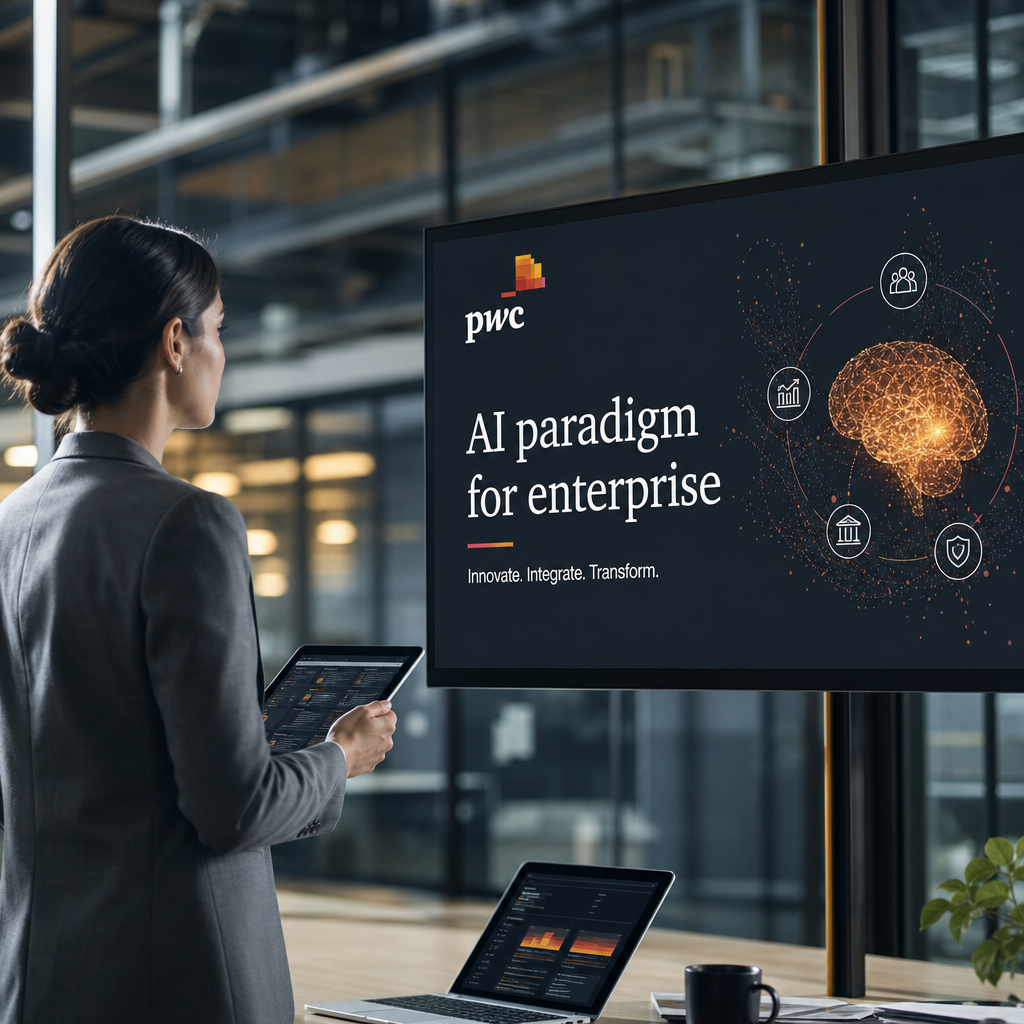
PwC Unveils a New AI Paradigm for Enterprises
The realm of artificial intelligence is continually evolving, shaping the way enterprises operate. Recently, PwC has made waves by articulating a new AI paradigm designed specifically for enterprise application. This breakthrough highlights not only the potential of AI in transforming business landscapes but also its strategic integration within corporate frameworks.
While AI is not a new concept, the manner in which it is deployed in businesses often faces hindrances. PwC’s latest blueprint aims to overcome these challenges by offering a streamlined implementation strategy. This strategic model could set new benchmarks in how businesses leverage AI for optimum efficiency and innovation.

The Enterprise AI Landscape
Enterprises worldwide are increasingly adopting AI solutions to enhance operations and stay competitive. However, the journey from conceptualization to execution often involves navigating complex technological and cultural landscapes.
AI adoption typically requires a concrete alignment between technology and business objectives, something that PwC’s new paradigm seeks to address seamlessly.
Key Components of PwC’s AI Paradigm
PwC’s AI paradigm for enterprises is built on several key components. Understanding these can provide deeper insights into how this new framework can drive business success.
- Data Strategy: At the heart of any AI solution is quality data. PwC emphasizes developing a robust data strategy to ensure the AI solutions can provide accurate insights.
- Scalability: Introducing scalable AI technologies ensures that enterprises can adapt and evolve their tech stack as their needs grow.
- Integration: Smooth integration of AI solutions into existing processes remains crucial, minimizing disruptions while maximizing benefits.
Challenges in AI Implementation
Despite its potential, AI implementation faces several challenges within enterprises. Recognizing these hurdles can help in strategically overcoming them.
- Cultural Resistance: Change often meets resistance, and introducing AI is no different. Building a culture that embraces digital transformation is vital.
- Resource Allocation: Deploying AI is resource-intensive, from financial investment to specialized workforce training.
- Ethics and Compliance: Ensuring AI deployment complies with ethical norms and industry regulations is a non-negotiable aspect of implementation.
Table: AI Implementation Challenges in Enterprises
| Challenge | Description |
|---|---|
| Cultural Resistance | Lack of willingness to adapt to AI technologies |
| Resource Allocation | High costs and need for skilled personnel |
| Ethics and Compliance | Ensuring AI initiatives follow ethical guidelines |
PwC’s Vision for the Future
PwC’s AI paradigm is not just about present capabilities but strategically looks towards the future. It aims to empower enterprises with predictive insights and automation that redefine decision-making processes.
As AI becomes more ingrained in business DNA, PwC’s approach could be pivotal to creating smarter, more resilient enterprises ready for the challenges of tomorrow.