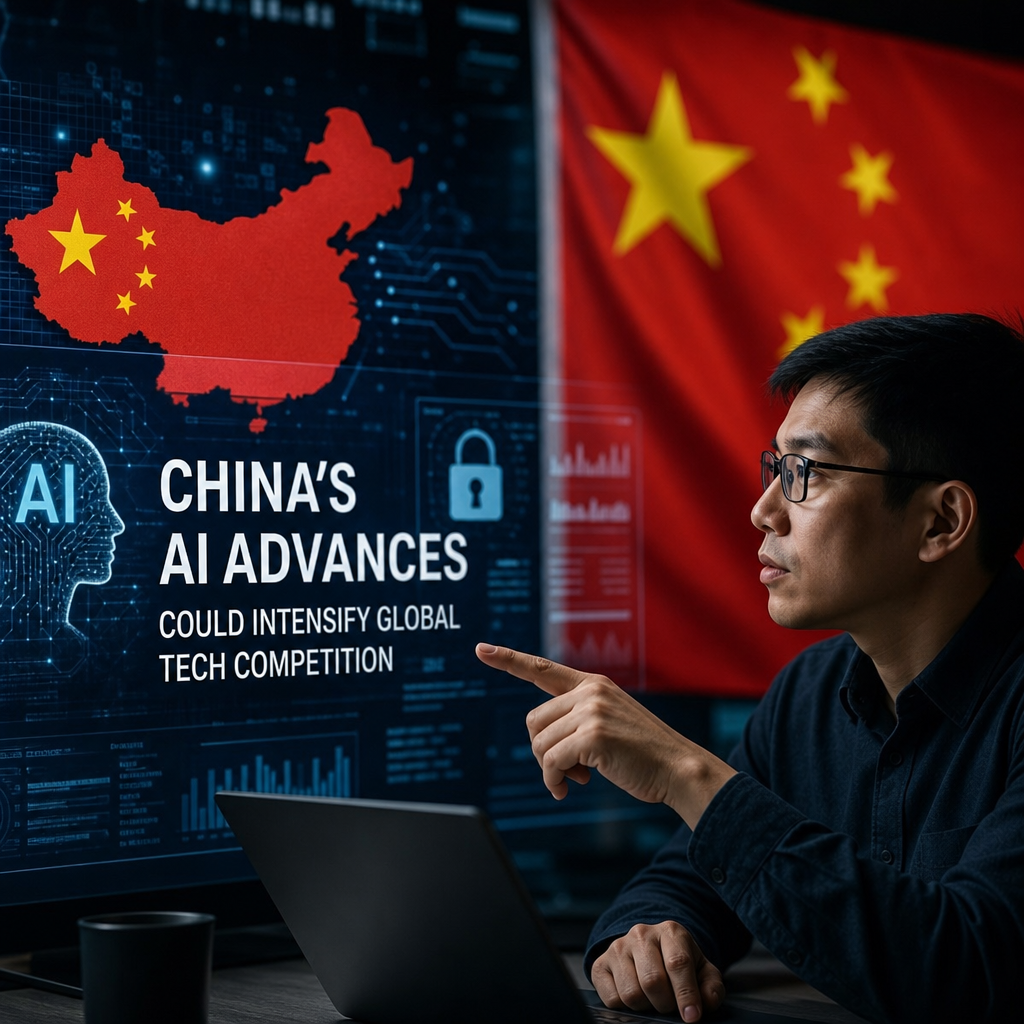
The Rising Tide of China’s AI Progress: Implications for Global Tech Competition
In an era where technology is profoundly reshaping the world, the advancements in artificial intelligence (AI) have emerged as a crucial factor in global competition. Among the key players in this race, China stands out with its rapid developments in AI technology, bringing an intensified competitive edge to the global tech landscape. But what are the implications of China’s stride in AI for the international community, and how does it affect the tech race at a macro level?
The prospect of China’s AI advancements is not just a matter of technological capability but speaks volumes about strategic global influence. As cybersecurity experts warn, the ripple effects could transform not only the tech industry but also economic and geopolitical dynamics worldwide. Let’s delve into the dimensions of this advancing AI force and understand its potential to reshape global technology competition.

China’s Strategic AI Blueprint
China’s approach to AI development is backed by strategic planning at the national level. With initiatives like the “Next Generation Artificial Intelligence Development Plan,” China aims to become the world leader in AI by 2030. This includes allocating substantial resources and creating favorable policies to foster AI research and application.
The government’s active role is evident in its support for both state-owned and private enterprises, allowing them to innovate unhindered. This double-edged approach is accelerating China’s ability to compete globally.
Key Areas of AI Expertise
- Natural Language Processing (NLP): China’s vast and diverse linguistic dataset allows it to excel in NLP technologies, crucial for seamless machine-human interactions.
- Autonomous Vehicles: With smart cities and massive data streams, China has a robust testing ground for developing autonomous vehicle technology.
- Facial Recognition: China’s advancements in facial recognition are notable, leveraging vast surveillance datasets to enhance machine learning algorithms.
Global Repercussions of China’s AI Ambitions
The ripple effect of China’s AI growth is a matter of global interest as it sets new benchmarks. Countries and tech companies must recalibrate their strategies to stay competitive in this rapidly evolving landscape.
Moreover, China’s progress in AI influences international tech policies and paves the way for cross-border technological collaborations and rivalries.
The Cybersecurity Dilemma
With AI innovations come challenges in cybersecurity. As the world becomes more interconnected, the threats posed by cyberattacks also grow.
China’s advancements could potentially increase cybersecurity complexities, compelling nations to bolster their digital defenses.
Comparison Table: Key Players in the AI Race
| Country | Strengths | Recent Innovations |
|---|---|---|
| China | Government-backed AI initiatives, large datasets | Facial recognition, autonomous vehicles |
| United States | Private sector leadership, research universities | Generative AI, predictive analytics |
| European Union | Ethical AI frameworks, regulation | AI in health tech, environmental monitoring |
The Road Ahead: Collaboration and Competition
Navigating the future of global tech competition involves a complex tapestry of collaboration and competition. Countries and companies must engage in strategic partnerships while maintaining an edge in AI innovation.
For businesses, understanding AI trends and adapting to technological shifts becomes imperative for survival in a market where China’s AI prowess is increasingly influential.
A Vision for Ethical AI
As the AI arms race continues, a commitment to ethical AI development remains essential. Countries must collaborate to create balanced AI policies that promote innovation while preserving ethical standards.
This approach ensures that AI serves as a force for good, contributing to global advancement without compromising on human values.