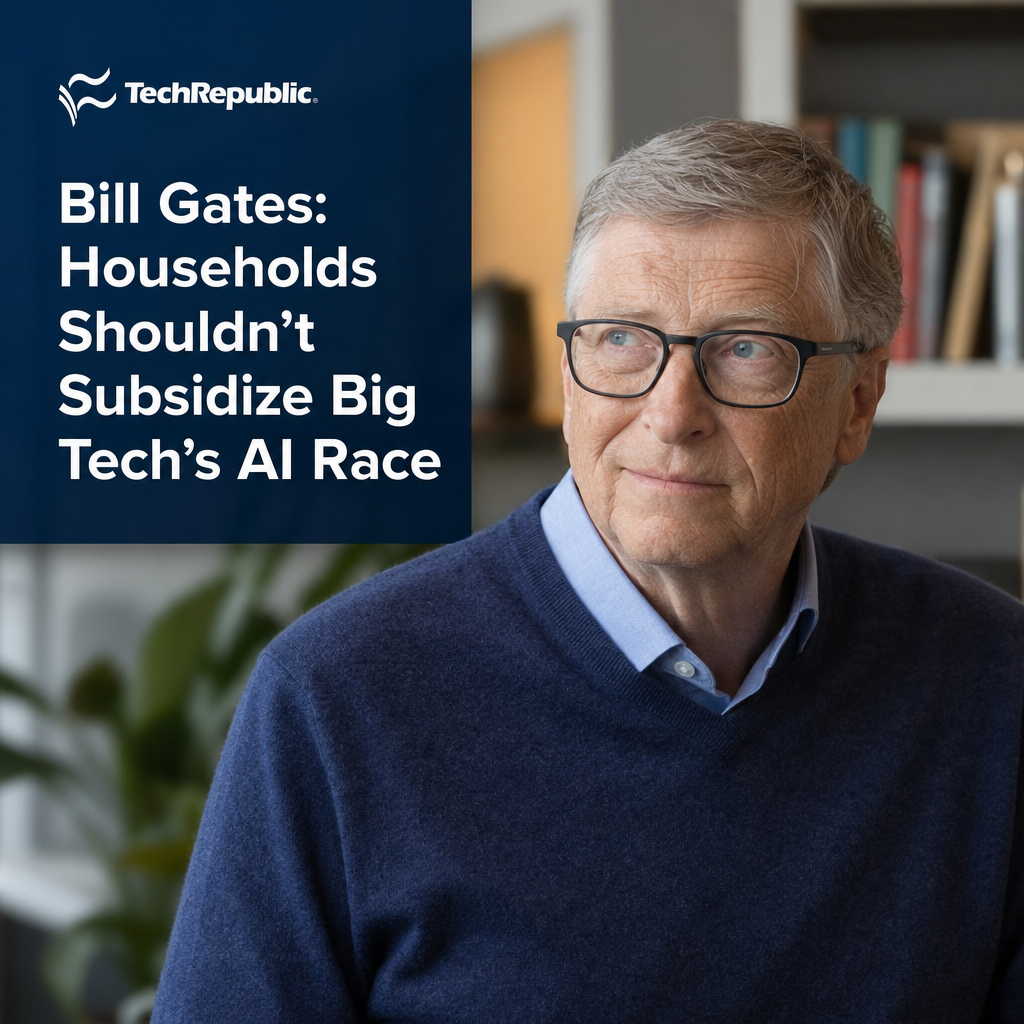
Bill Gates Weighs in on AI Financing: A Call for Responsible Investment
In the rapidly evolving world of technology, Artificial Intelligence (AI) remains a focal point of discussion. Bill Gates recently made headlines, asserting that the financial burden of the AI race should not fall on households. As Big Tech companies invest heavily in AI development, understanding who shoulders these costs becomes a crucial issue.
The AI race has seen companies investing billions to outpace their competitors. These developments promise innovation but also raise ethical and economic questions. The involvement of household finances in subsidizing this race sparks a conversation about responsible investment in AI.

The Current State of the AI Race
Market leaders in AI are on a relentless quest for breakthroughs. Companies like Google, Amazon, and Microsoft allocate substantial resources to foster AI advancements. Their investments aim to enhance products and services significantly, but they also stir debates about private funding versus public subsidy.
Funding Sources
AI development relies on various funding sources. A majority comes from corporate R&D budgets, venture capital, and public-private partnerships. However, public funds through grants and subsidies raise questions about their impact on taxpayers.
- Corporate R&D Budgets: Investing directly in cutting-edge AI research.
- Venture Capital: Infusing startups with funds to innovate rapidly.
- Public Subsidies: Utilizing taxpayer money to support foundational research.
Implications of Household Contributions
When public funds are used, there is often an indirect contribution from households. This approach heightens ethical considerations. Should everyday citizens bear the cost for private enterprise benefits? Gates hints at the necessity for equitable financial strategies.
Economic Considerations
As AI technologies permeate various sectors, economic implications become apparent. Efficient regulation and transparent funding models are critical in balancing innovation and household impacts.
| Aspect | Implication |
|---|---|
| Funding Transparency | Ensures clear understanding of where AI funds originate. |
| Public Investment | Needs justification on societal benefits versus costs. |
| Corporate Responsibility | Pressures companies to self-fund rather than rely on public subsidies. |
Path Forward: Striking a Balance
Advocating for private sector responsibility, Gates emphasizes a balanced approach. He suggests that while innovation is crucial, sustainable and ethical investment practices are non-negotiable.
Moving Towards Ethical AI Development
To mitigate risks, a framework focusing on ethical funding and responsible AI deployment is essential. Policymakers and industry leaders alike must collaborate to craft guidelines that prioritize citizen welfare alongside technological progress.
- Establishing clear policies to delineate public and private funding roles.
- Encouraging transparency and accountability in AI investment.
- Promoting sustained dialogues between stakeholders.