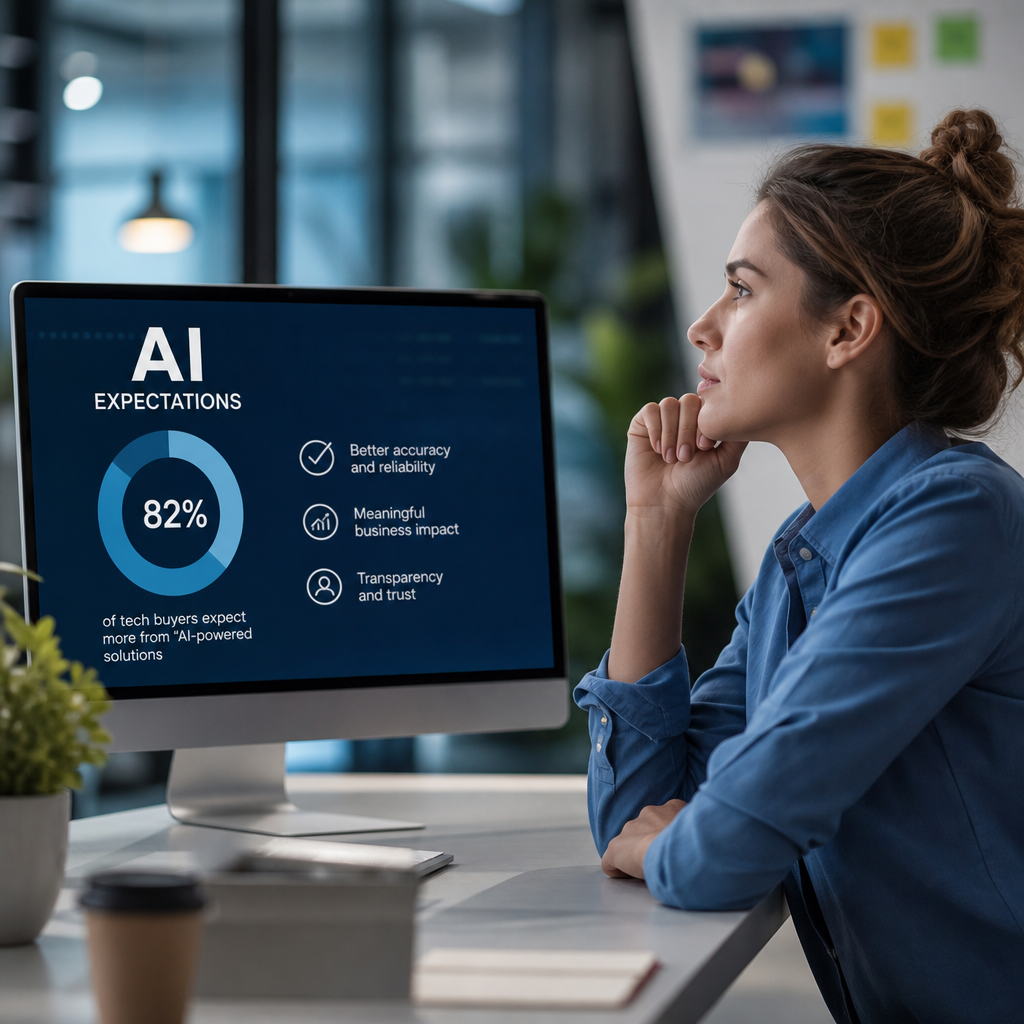
Tech Buyers Demand More: An Insight into ‘AI-Powered’ Expectations
The concept of artificial intelligence (AI) has evolved from a futuristic idea to a present-day reality shaping diverse industries. As these technologies become more integrated into our daily lives, expectations have evolved, particularly among tech buyers. Today’s buyers seek more than just the label of ‘AI-powered’; they desire substantiated value and genuine innovation.
In recent years, the global market has witnessed an explosion in AI applications. However, alongside this growth is a discerning audience that demands concrete evidence of AI capabilities. This shift in sentiment is driving companies to not only rely on AI branding but to demonstrate tangible benefits that these systems offer. In this article, we delve into this emerging trend, exploring what buyers expect and how businesses can adapt to meet these heightened standards.

The Changing Landscape of AI Expectations
The early fascination with AI largely stemmed from its potential to revolutionize business operations. Initially, the mere mention of AI was sufficient to captivate attention and create perceived value. However, as organizations increasingly integrate AI into their processes, the novelty wears thin and expectations grow.
Today’s tech buyers are no longer satisfied with broad claims. They seek definitive answers to two pressing questions: How does this AI add value? How is the intelligence of this technology being measured and ensured?
What Do Buyers Expect Now?
- Proof of Concept: Buyers want measurable outcomes before making commitments to AI solutions. They expect vendors to provide evidence of past successes and detailed demonstrations.
- Transparency: The inner workings of AI systems must be clear. Understanding the data behind AI decisions has become a priority for buyers concerned about ethical implications and accountability.
- Customization and Integration: Solutions need to be not only effective but also adaptable to specific business needs. Seamless integration with existing systems is a must.
Adapting to Escalating Demands
To meet growing expectations, businesses must pivot their strategies. Simply having AI in their offerings is not enough; they need to reposition their value propositions to focus on problem-solving and specific use-case benefits.
Tech companies are now asked to be transparent about how their AI functions, explaining the algorithms and data used. Buyers desire insight into the entire lifecycle of an AI system, from data collection to decision-making processes.
Strategic Adaptations
- Focus on Results: Highlighting case studies with proven ROI and showcasing AI’s transformative impact on businesses.
- Openness in Data Usage: Clearly communicating data sources and processing methods to build buyer confidence in AI fairness and accuracy.
- Enhanced Support: Providing ongoing training and support ensures continuous alignment of AI tools with buyer needs.
AI’s Place in Business: Table of Key Metrics
| Expectation | Metric |
|---|---|
| Proof of Concept | Number of successful implementations |
| Transparency | Detailed algorithm explanations |
| Customization | Adaptation to existing systems |
| Integration | Speed and ease of integration |
In today’s fast-paced digital landscape, remaining static is not an option. As AI continues to evolve, tech companies must be proactive in aligning with the refined expectations of their buyers, demonstrating both innovation and tangible results.
Ultimately, the success of AI integration hinges on its ability to deliver on the promise of enhanced efficiency and productivity while maintaining transparency and ethical standards.