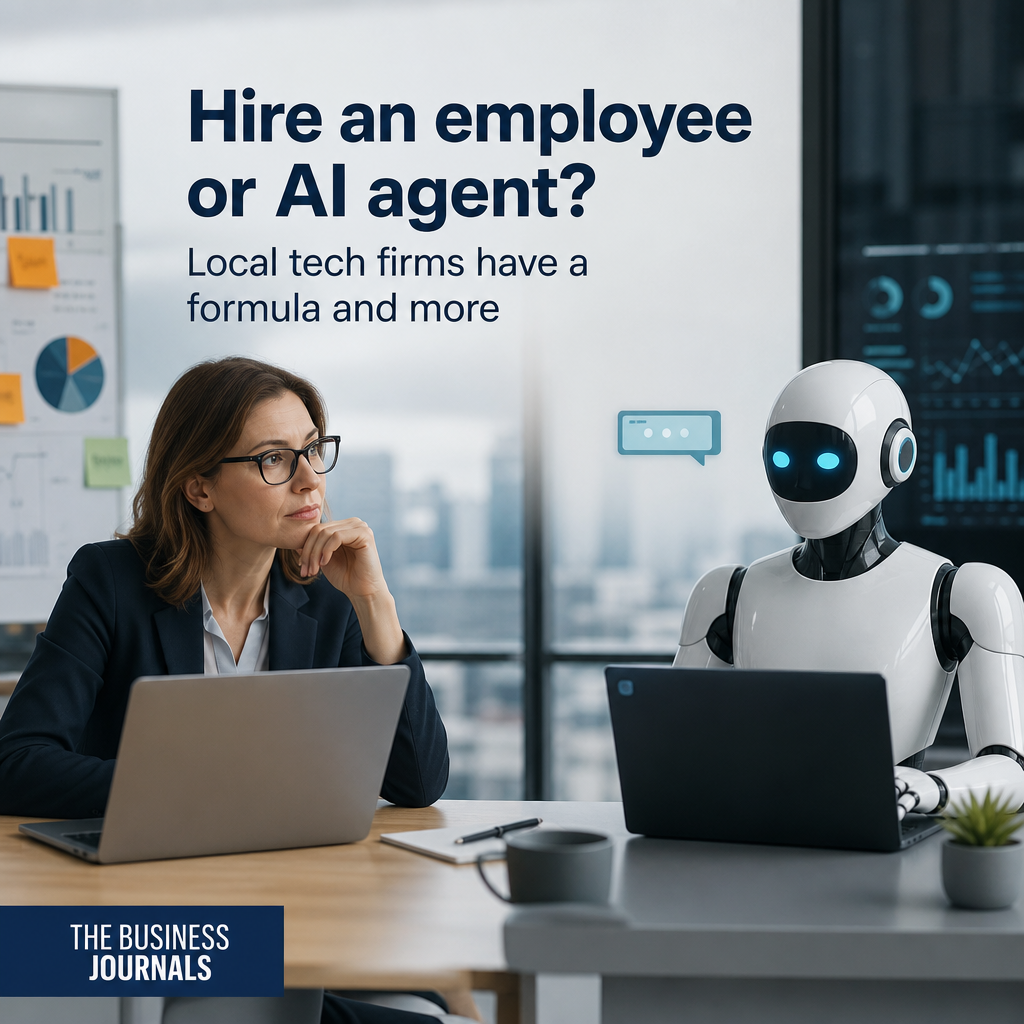
Hire an Employee or AI Agent? Local Tech Firms Have a Formula
The business world stands at the crossroads of a pivotal decision: when to hire a human employee and when to deploy an AI agent. This is not merely a futuristic notion but a present-day reality affecting strategic decisions across industries.
With advancements in artificial intelligence, companies are tasked with determining the most effective blend of human skills and AI capabilities. Local tech firms, particularly agile startups and savvy enterprises, seem to have found a formula to make this choice intricately balanced and strategically sound.

The Current State of AI in Business
AI technology has transcended novelty to become a cornerstone of business operations. It’s imperative to understand the functionalities AI can perform efficiently before integrating it into your workforce.
Why Might an AI Agent Be Preferable?
- Cost Efficiency: AI can operate round the clock without requiring salaries, benefits, or overtime pay, ultimately reducing operational costs.
- Consistency and Speed: AI processes large volumes of data accurately and at high speed, unimaginable for a human, ensuring consistent outcomes.
- Data-Driven Insights: Algorithms can analyze patterns and provide insights that inform business strategies beyond human analytical capabilities.
Scenarios Where Human Employees Excel
- Complex Problem Solving: Humans excel in ambiguous situations requiring critical thinking and creative solutions where AI might struggle.
- Emotional Intelligence: Jobs that require empathy and nuanced human interactions often need a personal touch that AI can’t replicate.
- Adaptability: Humans can adapt to unforeseen changes and unexpected challenges with flexibility and resilience.
Key Considerations for Decision-Making
The decision isn’t binary; it involves assessing multiple factors involving costs, capabilities, and strategic objectives. Let’s examine how these considerations play out in practice.
Cost-Benefit Analysis
Conducting a cost-benefit analysis offers a clear view of the financial implications of each option. Here’s a basic comparison:
| Aspect | Human Employee | AI Agent |
|---|---|---|
| Initial Costs | Recruitment and training expenses | Deployment and setup expenses |
| Operational Costs | Salaries, benefits, taxes | Maintenance and updates |
| Performance | Varies based on individual | Consistent and scalable |
Toward a Blended Workforce
The ideal approach combines the strengths of both humans and AI to enhance overall business performance. This integration focuses on capitalizing on each party’s strengths while mitigating their weaknesses.
Implementing Collaborative Functions
- Augmenting Human Tasks: AI can be used to handle repetitive tasks, freeing human workers to focus on more strategic initiatives.
- Enhanced Customer Experiences: AI provides data analytics while humans manage client relations, resulting in a superior customer journey.
- Training and Development: AI tools can recommend personalized training paths, assisting employees in upskilling efficiently.