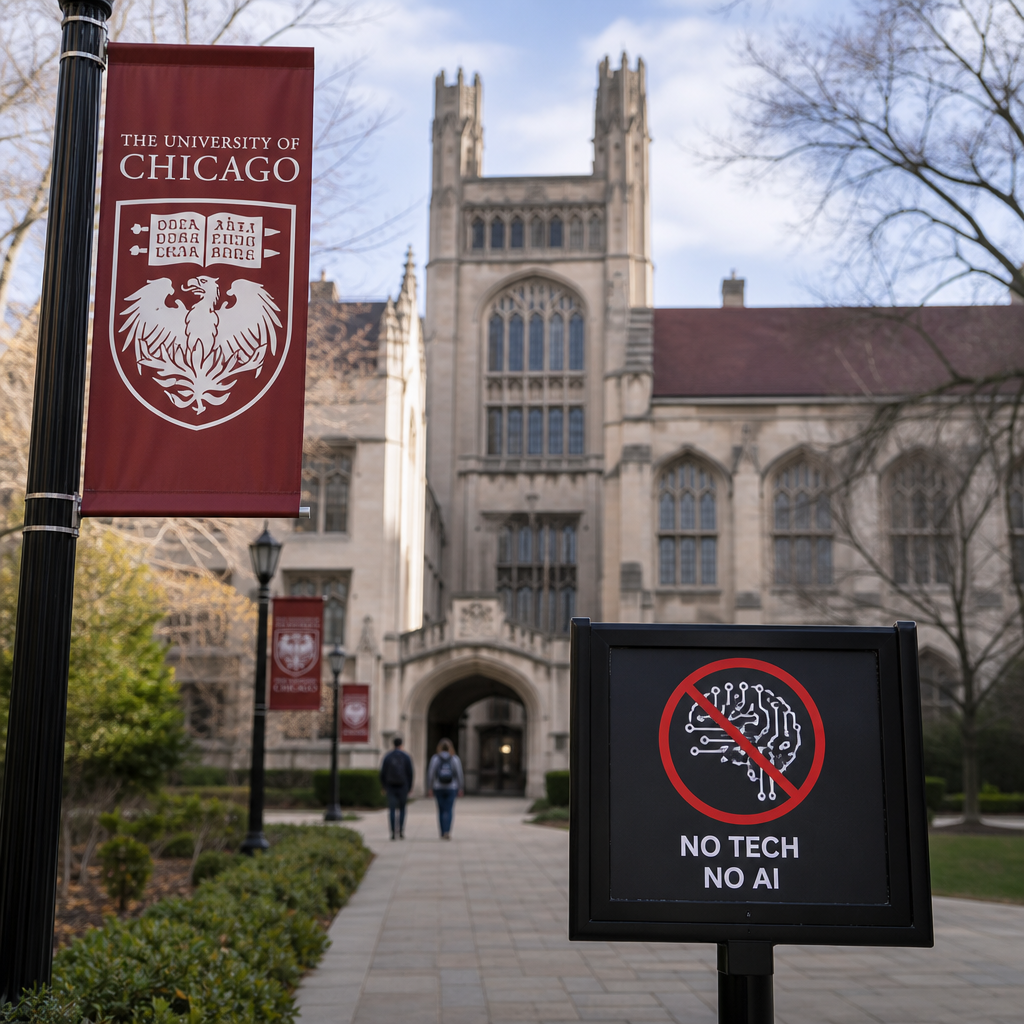
UChicago’s Bold Move: Banning Tech and AI in Social Science Classes
The University of Chicago has recently taken a stand that is causing ripples through the academic world: banning tech and AI from its social science classes. In an era where technology is often seen as the panacea for educational challenges, this decision is both surprising and thought-provoking.
This move is not just a simple rejection of modern tools but a statement on the value of traditional learning methods. It highlights the intrinsic importance of human interaction and critical thinking in a field as nuanced as social sciences. But why has UChicago made this decision, and what implications could it have?

The Reasoning Behind the Ban
UChicago’s decision stems from concerns that technology, while facilitating, may also hinder deep and meaningful learning in social sciences. The university believes that AI tools in particular could lead to an over-reliance that diminishes the critical analysis skills inherently required in this field.
Furthermore, there is a fear that generative AI may influence the originality of students’ work, potentially stunting creativity and limiting the development of genuine scholarly inquiry.
What the Ban Entails
The ban on tech and AI covers a wide range of tools including AI-driven research aids, digital note-taking apps, and even online translation services. This decision aims to encourage students to engage with physical resources and foster face-to-face discussions.
This policy is not entirely anti-tech, as it allows for the use of technology in accessing digital libraries and other resources that do not replace the critical thought processes integral to the study of social sciences.
Implications for Students and Faculty
The immediate reaction may be concern from students and faculty who have become accustomed to leveraging technology for efficiency. However, this change could inspire a renewed dedication to traditional research methods.
- Students may develop stronger analytical skills.
- Improved concentration and retention as they engage directly with learning materials.
- A potential increase in the authenticity and originality of their academic outputs.
Balancing Technology and Education
The debate over the role of technology in education is ongoing. While UChicago’s decision is bold, it invites a larger conversation about how educational institutions can balance tech use with traditional methods to optimize learning outcomes.
A blended approach that incorporates both AI-powered tools and human-centric teaching methods may be the ideal pathway forward for other institutions.
Case Study: Approaches from Other Universities
University A has integrated AI as supplementary, allowing students to explore technology alongside human guidance.
| Institution | Approach |
|---|---|
| University A | AI as supplement |
| University B | Tech-free learning zones |
Conclusion
The University of Chicago’s tech and AI ban in social science courses is a unique stance that promotes a return to traditional educational values. Its outcomes remain to be seen, but it certainly sets a precedent for a discussion on the role of technology in academia.
The key takeaway is the importance of evaluating how technology is used in education and ensuring it serves as a tool to enhance rather than replace critical thinking and scholarly engagement.