The Implications of a US Ban on Chinese Optical Transceivers in the Tech Industry
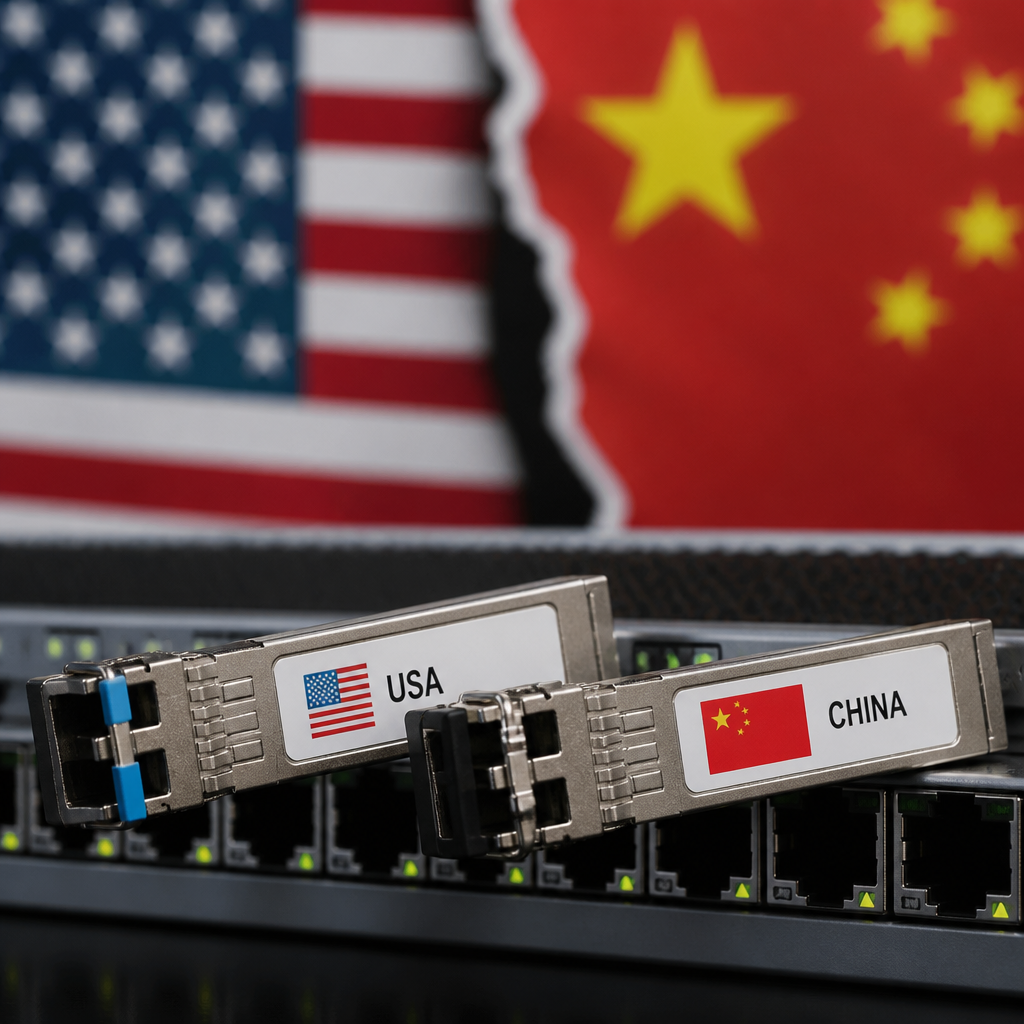
Picture a world where the backbone of global internet infrastructure undergoes a seismic shift because of international policy. This is the reality we face with the potential of a US ban on Chinese optical transceivers. Such a move would not just reroute supply chains but could also reconfigurate global tech alliances.
In recent years, the tech landscape has become a battlefield. From semiconductors to 5G networks, nations are scrapping for strategic advantage. Amidst this milieu, optical transceivers—a staple of modern networks—have become the next potential flashpoint in the ongoing US-China tech war.

The Role of Optical Transceivers in Modern Technology
Optical transceivers are crucial components that enable data transmission over long distances at high speeds. Acting as the nervous system of global communication networks, these devices convert electrical signals into optical signals and vice versa, forming the basis for modern internet infrastructure.
- Support high-speed data transmission
- Bridge long-distance communication channels
- Essential for 5G and cloud services
A pivot in optical transceiver supply chains—like a US ban—could have a far-reaching impact.
Impact on Global Supply Chains
An outright ban on Chinese optical transceivers would ripple through tech supply chains worldwide. Companies heavily reliant on these components would have to find alternative suppliers, potentially disrupting service continuity.
A consolidated shift of sourcing might sharply increase demand for providers from other regions, altering market dynamics.
| Factor | Impact |
|---|---|
| Supply Chain Disruption | Forced realignment and increased costs |
| Supplier Diversification | Shift in market power dynamics |
| Infrastructure Investment | Increased focus on domestic manufacturing |
Geopolitical Tensions Amplified
This potential ban doesn’t merely impact business; it’s a broader geopolitical maneuver. The tension between the US and China has been steadily rising, making technology a central arena of conflict.
Security concerns have been the driving force behind many US policies aimed at limiting Chinese tech influence. In this context, banning Chinese optical transceivers is not just an economic decision but a strategic move in maintaining technological dominance.
Strategic Alliances and Political Fallout
The US may seek stronger alliances with its tech partners as barriers against Chinese influence mount. Countries are witnessing how technologically interconnected they are and may be forced to take sides, further polarizing the industry.
- Increased collaboration among US allies
- Pressure on nations to side economically and strategically
- Potential escalation in tariff and trade policies
The Future of Tech Innovation
While a ban could catalyze innovation domestically within the US, it might lead to a fragmented global tech ecosystem. Innovation thrives in collaborative environments, and the restrictions could limit the sharing of knowledge and expertise across borders.
This could result in isolated innovation hubs, each developing at different paces, which might slow the overall progress of technology.
Conclusion: Weighing the Costs and Benefits
The potential US ban on Chinese optical transceivers is emblematic of larger trends in the tech industry. It illustrates the intersection of international policy, business strategy, and technological innovation.
While this ban might secure some national interests, stakeholders will need to carefully consider its far-reaching implications on global tech advancement and collaboration.