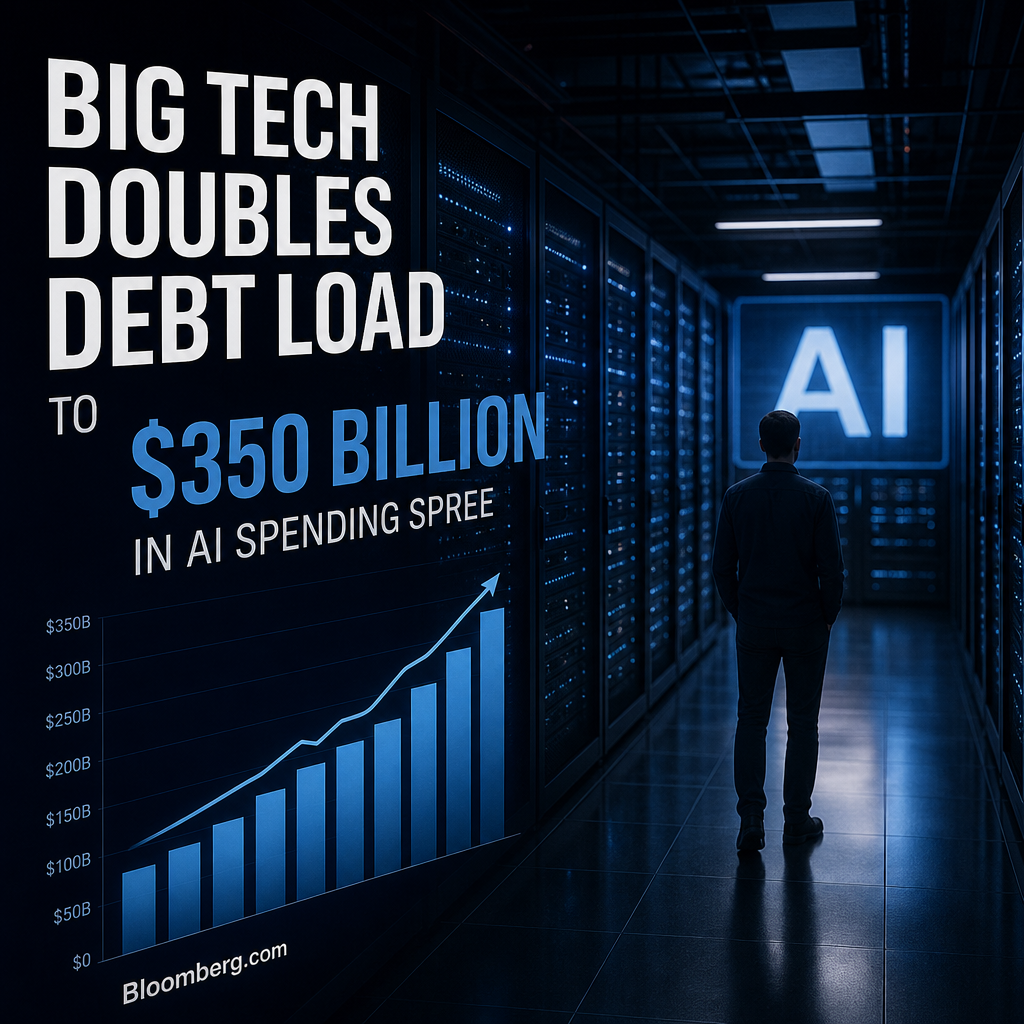
The AI Spending Spree: Big Tech’s $350 Billion Bet on the Future
In a move that is both audacious and unprecedented, major tech companies have significantly increased their debt load to fund an expansive push into artificial intelligence. With a cumulative debt of $350 billion, these industry leaders are heralding a new era defined by rapid developments in AI and its integration into everyday business processes.
The burgeoning interest and investment in AI by Big Tech are anticipated to transform traditional business models, driving efficiency and innovation. This change is expected to redefine the economic landscape, similar to how the internet revolution did two decades ago. Now, let’s delve deeper into the reasons behind this investment bonanza and its implications for the industry.

The Motivation Behind the AI Investment Surge
Tech companies are not just whimsically splurging on AI for its futuristic allure. At the core of this spending spree is the belief that AI capabilities will unlock unparalleled levels of operational efficiency, customer insights, and new revenue streams.
As computation power and data storage have become more cost-effective, the barriers to advanced AI development have lowered. This propels companies to view AI as a critical component in staying competitive in an increasingly digital marketplace.
AI Facilitating Business Transformation
- Automation of mundane tasks can lead to considerable cost savings and error reduction.
- Enhanced data analytics and insights provide a competitive edge in market predictions and consumer behavior forecasting.
- Development of novel product features that cater to personalized customer experiences.
Challenges Facing Big Tech in AI Investment
While the potential rewards are significant, this debt-fueled AI investment is not without its risks. Big Tech firms must navigate potential pitfalls to realize their AI ambitions.
Ethical concerns, regulatory hurdles, and the need for robust AI infrastructures are just a few of the obstacles these companies must address to ensure both sustainable growth and compliance.
Managing Ethical and Regulatory Concerns
- Developing AI systems that are transparent and unbiased.
- Ensuring AI applications adhere to privacy regulations and protect user data.
- Balancing automation with the preservation of jobs and social equity.
The Future of AI in Business and Enterprise
As AI continues to evolve, the landscape of business and enterprise will inevitably shift, driven by innovation and enhanced capabilities. This massive investment by Big Tech is likely to set the tone for industries worldwide.
Moving forward, firms will need to adapt to this new technology-driven environment, ensuring they leverage AI to its fullest potential while remaining mindful of ethical and regulatory landscapes.
Anticipated Developments and Impact
| Development | Potential Impact |
|---|---|
| AI-Driven Automation | Increased efficiency in operations lowering overhead costs |
| Advanced Analytics | Better forecasting leading to improved decision-making |
| Personalized Customer Experiences | Greater customer satisfaction and retention |