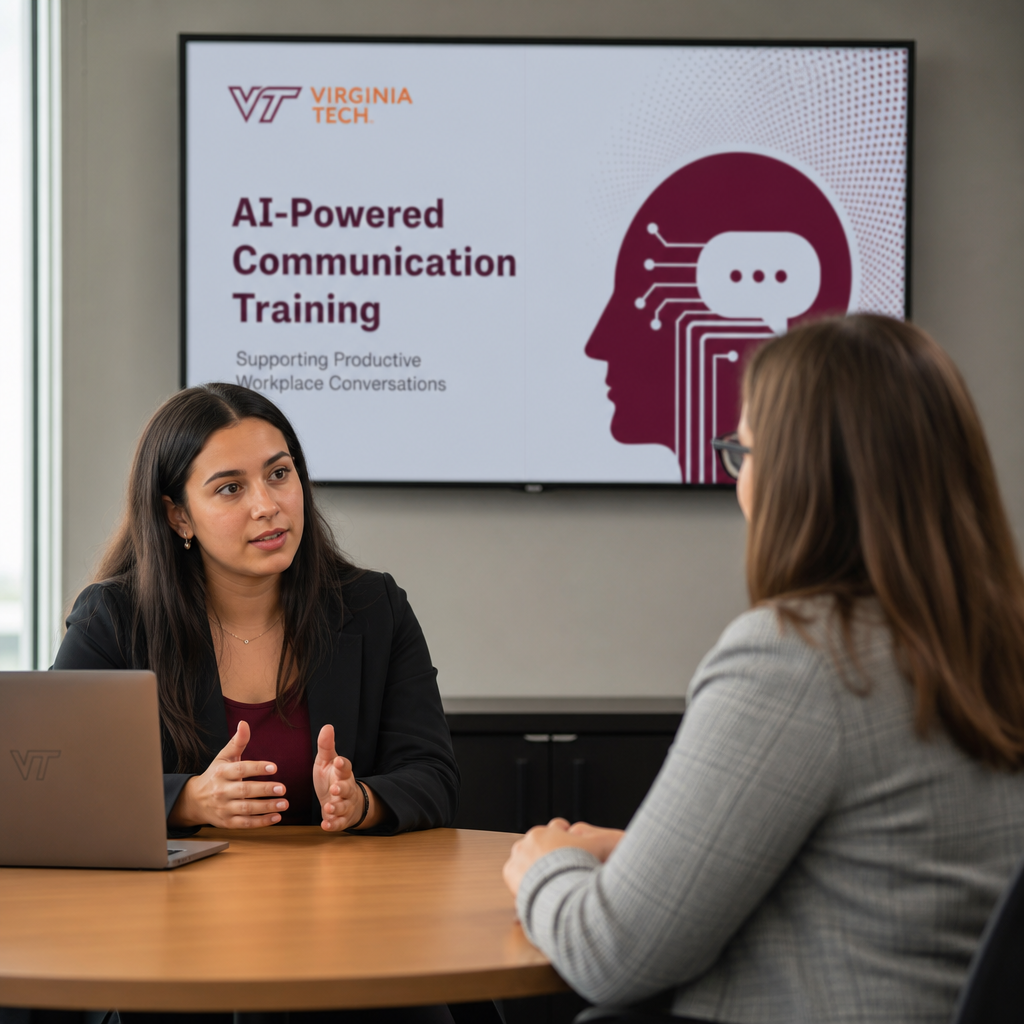
Transforming Workplace Dynamics: How Virginia Tech’s AI Innovations Are Facilitating Difficult Conversations
In the ever-evolving corporate landscape, the importance of effective communication cannot be overstated. Yet challenging conversations often create tension and discomfort, hindering progress and collaboration. Recognizing this, researchers at Virginia Tech are pioneering the use of Artificial Intelligence (AI) to redefine how we approach and handle these sensitive discussions.
This initiative is not just a technological breakthrough; it’s a potential game-changer for workplace dynamics. By leveraging AI, the team aims to provide tools that will ease the stress associated with difficult conversations, leading to more harmonious and productive work environments.

The Challenge of Workplace Conversations
Workplace conversations range from routine updates to challenging discussions involving feedback, conflict resolution, or negotiation. The latter can often be stressful, resulting in anxiety and miscommunication.
These challenging exchanges can impact morale, productivity, and even employee retention. Therefore, improving the quality and ease of these conversations is crucial for any organization.
The Role of AI in Communication
AI has been making significant inroads across various sectors, and communication is no exception. By analyzing large datasets and learning from patterns, AI-powered tools can offer insights that enhance understanding and engagement.
Virginia Tech’s researchers are applying these principles to create AI solutions that can predict conversation outcomes, offer real-time feedback, and guide users on effective communication strategies.
Benefits of AI-Driven Tools
The introduction of AI in workplace communication brings numerous benefits. Here are a few:
- Improved Clarity: AI tools can analyze speech patterns to suggest clearer, more empathetic language.
- Neutral Mediation: AI can act as a neutral third-party, facilitating conversations and promoting fairness.
- Real-time Feedback: As conversations occur, AI can provide instant feedback, promoting a continuous improvement cycle.
Implementing AI in the Workplace
Integrating AI for communication requires thoughtful implementation. Organizations must consider cultural readiness, employee training, and ethical implications.
Virginia Tech’s team is focusing on user-friendly interfaces and comprehensive training modules to ensure a smooth transition.
Potential Challenges and Ethical Considerations
The application of AI in sensitive areas like communication raises ethical questions. Privacy concerns and the risk of bias in AI algorithms are critical considerations.
Researchers emphasize the importance of transparency and accountability in AI systems to build trust and ensure fair outcomes.
A Look Ahead
As AI continues to evolve, its impact on workplace communication is likely to grow. Future innovations may include more personalized AI assistants that understand individual communication styles.
Virginia Tech’s research is paving the way for a new era in workplace interaction, where technology supports rather than replaces human dialogue.
Conclusion
The potential of AI to transform workplace dynamics is immense. By focusing on improving challenging conversations, Virginia Tech’s researchers are addressing a critical aspect of organizational culture.
As these tools develop, businesses can look forward to more effective, empathetic, and productive work environments.